
What a Technician Sees After a Big Blow
After a tropical system pushes through, the calls follow a pattern. A homeowner opens the garage to find one or two panels bowed inward like a sail that caught too much wind. The rollers have popped halfway out of the track. Sometimes the whole track has been pulled away from the frame, hanging by a single bent bracket. In the worst cases, the door is still in one piece, but it's been shoved several inches off its rails and won't move at all. None of this happens because the door is old or cheap — it happens because a standard residential door simply isn't built to resist sustained wind pressure and the sudden pressure swings that come with gusty, rotating storm bands off the Gulf.
Why the Garage Door Is the Weakest Wall in the House
Every other wall in a home is a solid, continuous surface tied into the framing. The garage door opening is the largest unsupported gap in the structure, covered by a panel that's engineered to roll up and down easily — which also means it's engineered to flex. When wind hits that panel directly, it can bow, buckle, or tear loose from the track. Once a garage door fails during a storm, wind gets inside the garage and pressurizes the space from underneath the roof. That internal pressure is a major reason roofs peel off during high-wind events. A door that holds is doing more structural work than most people realize.
Signs Your Current Door Isn't Ready
- Visible flex when the wind blows — if you can see the panel ripple or bow during a regular gusty afternoon, it will do far worse in a tropical storm or hurricane-force wind.
- Rust at the hinges, track bolts, or bottom corners — salt air along the coast accelerates corrosion, and rusted hardware is weaker hardware exactly where you need strength most.
- Worn or cracked rollers — rollers that have flat spots or are chipped won't stay seated in the track under pressure; they're often the first thing to fail.
- Loose or bent track brackets — give the track a firm push by hand. If it moves away from the wall more than a fraction of an inch, the fasteners have likely worked loose over time from humidity and repeated door cycles.
- Swollen weatherstripping or a door that drags — humidity swings cause wood and some composite components to swell, which strains the opener and hardware even on a calm day.
Wind-Rated Doors vs. Standard Doors
Wind-load rated garage doors are built differently from the inside out: heavier-gauge steel, reinforced horizontal struts across the back of each panel, thicker tracks, and more frequent, stronger roller brackets. Standard builder-grade doors are designed for everyday use, not for resisting a sustained wind load pushing against the full face of the door. If your door was installed years ago without wind-load bracing and you're in a storm-exposed area near the coast, upgrading isn't overkill — it's closing the single biggest gap in your home's storm defense.
Retrofit bracing kits exist for some non-rated doors and can add a meaningful layer of reinforcement at a lower cost than full replacement, generally in the low hundreds of dollars range depending on door size and materials. They're a reasonable middle step if a full wind-rated door isn't in the budget this year, but they don't match the performance of a door engineered for wind load from the start.
Pre-Storm-Season Maintenance Checklist
- Lubricate rollers, hinges, and tracks with a garage-door-specific lubricant, not household oil, which attracts grit and dries out faster in salt air.
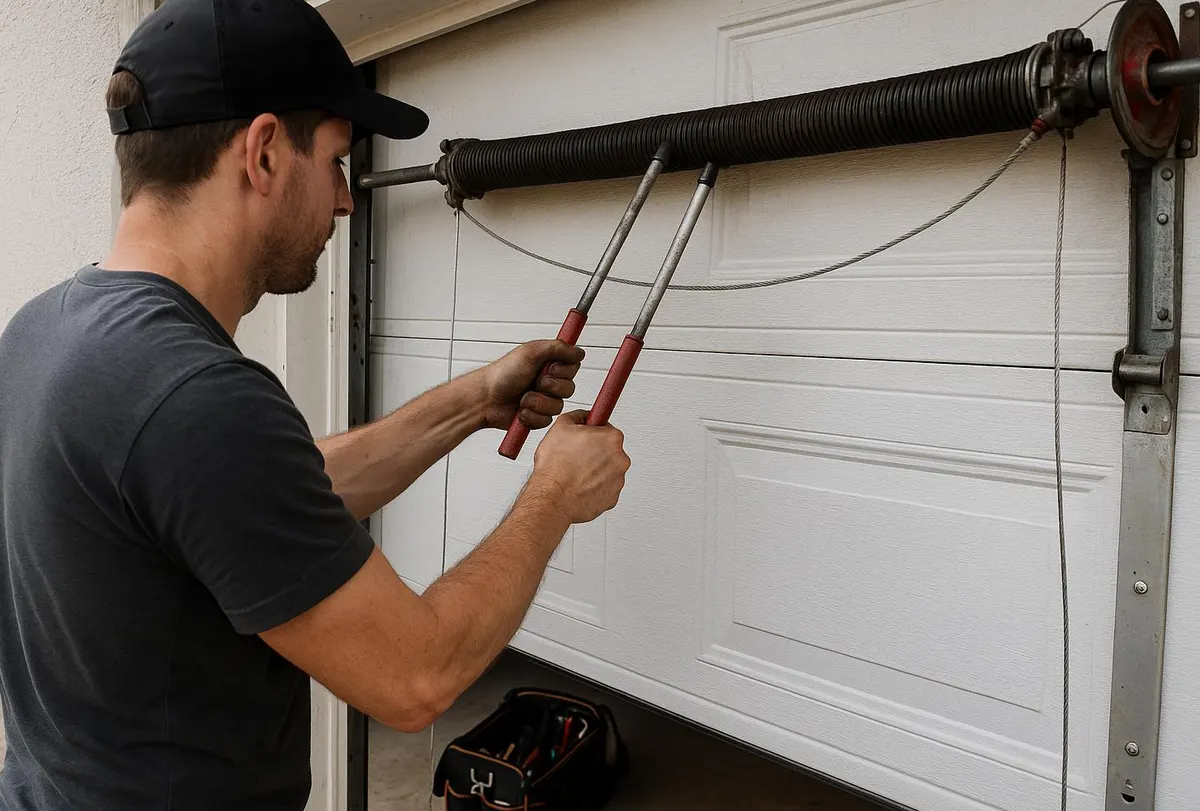
- Inspect and test the springs. Springs under tension are already working hard every time the door opens; added wind stress on a weak spring increases the chance of a sudden, dangerous failure. This is not a DIY repair — the tension involved can cause serious injury.
- Tighten all visible hardware — track bolts, hinge screws, and roller brackets loosen gradually from vibration and humidity cycles.
- Check the opener's force settings and auto-reverse. A door that's dragging or misaligned puts extra strain on the opener motor, which can fail at the worst possible time.
- Replace cracked or compressed weatherstripping to keep wind-driven rain from pushing water and debris into the garage during an afternoon downpour or a tropical system.
Before a Storm Watch Is Issued
Keep the door closed as much as possible once wind advisories go up — an open or partially open door gives wind a direct path under the roofline. If you have a manual bracing kit, install it per the manufacturer's instructions well before the weather arrives, not during. Don't rely on parking a vehicle against the inside of the door as a brace; it's not designed for that kind of load and can be dangerous if the door does fail.
When to Call Fort Walton Beach Garage Door Specialists
If you've noticed panel flex, rust creeping in around the hardware, or a track that's pulling away from the frame, that's the point to call rather than wait for storm season to test it for you. We handle Garage Door Installation for homeowners ready to move up to a wind-rated door, and our Garage Door Maintenance service covers the roller, spring, track, and hardware inspection that catches small problems before they become a failed door during a storm. We also handle Spring Replacement when tension components are worn past the point of safe DIY handling.
If you're in Fort Walton Beach, Destin, Niceville, Crestview, Mary Esther, Shalimar, Navarre, or Valparaiso and want your garage door checked before the next system rolls in off the Gulf, give Fort Walton Beach Garage Door Specialists a call. We'll look it over, tell you straight whether it needs maintenance or replacement, and get it storm-ready.